
Looking forward to this session? Share it!
Agentic AI becomes useful when it stops being a chat interface and starts completing real work. Giving a model tools is the easy part. The harder questions are operational: What should an agent actually own? Which steps should remain deterministic? Where does model judgment belong? What boundaries should be enforced in code rather than left to a prompt? When should a human intervene? And how do you know whether delegation is producing better business outcomes rather than simply more output?
Drawing on his experience operating AI inside Amazon and building production AI systems and software at Surmado, Luke F. Walton will break down a practical model for moving go-to-market work from AI assistance toward supervised and delegated execution. He will ground the framework in real operating patterns from global paid media and from Surmado, where an AI agent is entrusted to operate and change customer-facing production websites. The session will show how to decompose work, separate deterministic logic from model judgment, set permissions and escalation paths, enforce critical boundaries structurally, preserve reversibility and human oversight, and evaluate whether the resulting system is actually worth delegating to.
Key Takeaways
- Learn how to break a GTM workflow into deterministic steps, model judgment, and human decisions
- Examine what changes when an AI system is trusted to operate a customer-facing production asset instead of just recommending actions
- Determine when to enforce a boundary in code, architecture, permissions, or CI rather than relying on prompt instructions
- Calibrate the right level of AI autonomy based on stakes, reversibility, observability, and escalation paths
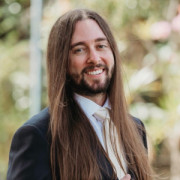

Luke F. Walton
Founder & CEO, Surmado | Senior Marketing Manager
Amazon