Most marketing teams have crossed the AI threshold by now. ChatGPT or Claude are probably in your tabs and bookmarks, and somebody on the team has built a custom GPT or Claude Code project.
The question isn’t really “are we using AI” anymore – it’s “are we any good at it?”
That’s the burning question – and the one teams need to answer with confidence going forward.
At our recent AI for Marketers Virtual Summit, we put it to three panelists who’ve been successfully working through this exact problem:
- Patricia Clark, VP of Go-to-Market at Nexxen
- Luke Walton, Senior Marketing Manager at Amazon
- Dr. Sharmin Attaran, Professor of Marketing at Bryant University

Moderated by Katelyn Brower, Director of PR, Social Media and Events at First Advantage, the session ran through agentic AI guardrails, the sea-of-sameness problem in branded content, AI-driven search, and the talent debate quietly tearing teams apart.
Here’s what stood out, along with some excellent advice you can bring to your own projects.

Maturity Isn’t About the Tools
The panel’s consensus is that AI maturity has almost nothing to do with how many tools your team has licensed.
Patricia made the point pretty bluntly. Right now, most teams she works with have learned to use ChatGPT, Claude, or Perplexity, maybe Copilot, and they think that’s the destination.
In reality, that’s just step one on a longer journey. “I would like to see the next stage of maturity be teams that go beyond those basic tools to really think about how we can connect together systems and really automate more of the work that we do,” she said.
Luke offered a useful historical example. Imagine asking app developers what mature app development looked like in 2009, the year after the App Store launched – their answer would have aged like milk. The same applies now. “We have really no idea where this is truly going beyond 18 months,” he said. “Getting good at being flexible and learning, I think, is what maturity actually looks like right now.”
Shar broke maturity into rough levels:
- Level 1 – Speed: Faster drafting, faster summarising, more output per hour. Most teams sit here. A gain, but a starting line.
- Levels 3–4 – Strategic intelligence: AI begins shaping which decisions get made. It runs scenario planning, identifies audience segments, and flags trends an analyst might have overlooked. “We kind of get a menu now, instead of building it from scratch ourselves,” Shar said.
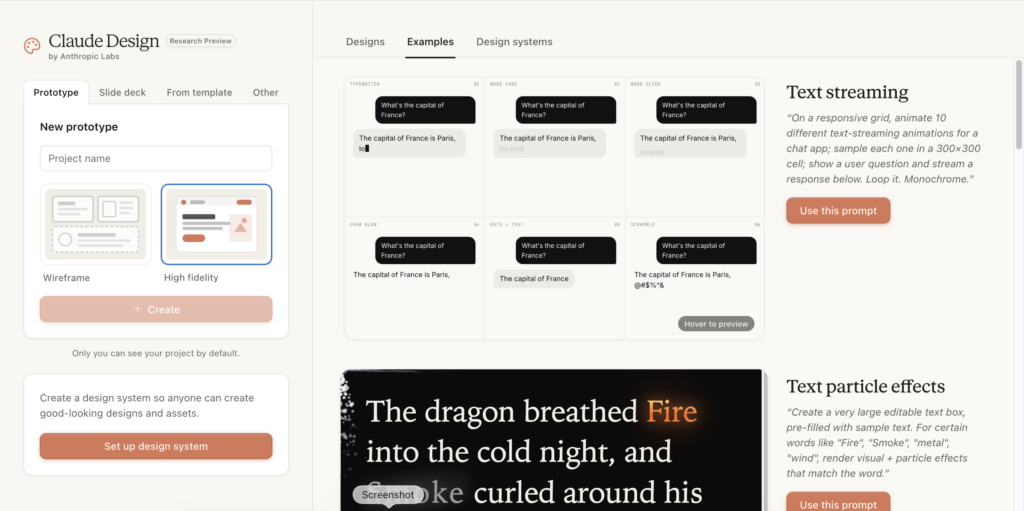
Claude Code, Claude Design, competitive offerings from OpenAI, and an army of other tools across text-to-image/video/sound are opening up near-unlimited pathways for process development and specialism.
“You Are Now Data Scientists and Software Engineers”
Most marketers are still using AI the way most use it – as an assistant. The leap to building AI-driven workflows requires a different level of thinking entirely – and Luke didn’t soften the answer.
“I have terrible news for all marketers,” he said. “You are now data scientists and software engineers.” His point being that getting hands-on with Codex and Claude Code, GitHub, automated code review, custom tooling, and workflow design is becoming par for the course.
The other half of the rewire is psychological. You have to make peace with the fact that you’re working with probabilistic systems that can still act frustratingly randomly. Luke compared Claude Code to a slot machine – brilliant outputs one minute, broken production code the next.
“Understanding how to navigate that slot machine and take those probabilistic outcomes and collapse them – that is so much of the name of the game,” was his solution – a true soft skill born out of the AI era.
🤓 Pro tip: Luke’s framing for building any agentic workflow – find the failure states first. Run it through several times, deliberately searching for where it breaks, then build code and human checkpoints around those weak spots.
The Adoption Trap: Why Top-Down Alone Fails
Top-down mandates alone never work (leadership pushing AI adoption from above). Yet, bottom-up curiosity alone never scales (individual marketers experimenting on their own).
Enterprise AI adoption needs both engines firing at once, and the panel was emphatic that overlooking either side breaks the whole thing, just in different ways
Patricia framed bottom-up curiosity as a middle-management responsibility, giving teams “the freedom and the tools and the flexibility to experiment, to try tools, to try out different ways of working.”
Without that, it’ll be tough to carve out a path towards something more than simply using LLMs. In her words, “You’re gonna be using free tools and sticking with LLMs, because you’re just never going to be able to advance beyond that. It takes a lot more to connect systems together.”
The reverse is also expensive. “You try and do top-down without the bottom-up support, you’re gonna pay for a lot of expensive things that aren’t gonna get used,” Patricia warned.
Luke said it comes down to understanding the strengths and limitations of AI tools and how these align with the strengths and limitations of your team. “If you are really good at understanding your problem, really good at understanding these tools, you can solve incredible problems.”
As such, AI still amplifies your team’s skills and will probably always do so. That is a key reason why marketing remains a human domain, with AI augmentation layered on top, not the other way around. AI must be embedded in strong human understanding and judgment to be at its best.
Where Competitive Advantage Lives When Everyone Has the Same Tools
Content used to be the bottleneck, but it isn’t anymore. So if everyone can produce polished output at scale, where does competitive advantage live? Shar’s answer hit the right notes:
“AI can commoditize content, but it cannot commoditize credibility.”
She gave some key examples, like how Duolingo turned a free app into a cult brand through community, meme culture, and a distinct personality.

Morning Brew similarly built millions of subscribers by engineering its content around one specific behavior: the email forward to a colleague. “The better question is not ‘how do we produce more,'” Shar said. “It’s ‘what does our audience trust us to say that no one else can say?'”
Patricia built on the point from a delivery angle. AI helps with quantity, but credibility comes from doing what your marketing promises.
“My team can go out and create the greatest content in the world, and they do,” she said. “But ultimately, my technology also has to deliver. Our company has to deliver what we’re saying we can do.”
Agentic AI: Where the Real Risk Lives
Agentic AI has been a big buzzword ever since ChatGPT went mainstream in 2024, but now, it’s becoming practically usable. The panel was transparent about both the promise and the drawbacks.
Luke’s pointed to conflicting inputs as a risk for agentic AI responses going wrong or decaying in some way. “It can solve problems, but it can’t solve dilemmas,” he said. “Humans are here for the dilemmas.”
Patricia’s view of programmatic advertising made her more skeptical that we’re as operational as the marketing keynotes suggest. “No one I know, and particularly salespeople, would ever trust an AI to write an email and send it to their largest client without them actually reading the text,” she said.
Right now, in her world, agentic AI is “much closer to experimental than operational.” Her timeline for robust operational use in advertising buying sits at 12 to 24 months.
This again comes down to ensuring the inputs are clean, building checkpoints, and avoiding the temptation of handing off quality control to AI.
Measurement, Snake Oil, and the Business Case
How do you measure the impact and effectiveness of AI? It’s a work in progress, and the panel didn’t pretend they had the ultimate answer.
Patricia reframed it that measurement has never been as quantitatively perfect as some would like it to be. “Has there ever been a time in your career when measurement has been perfect?” she asked.
Luke flagged the same, “There’s gonna be a lot of snake oil out there,” he said. “My DMs are already flooded with people saying, ‘I can attribute everything.’ No, you can’t.”
The bar for AI investment today is efficiency – defensible time savings as the floor, with more strategic metrics emerging as agents start pulling data across business functions. The C-suite doesn’t need flawless attribution, but a credible story of the benefits and how they apply.
Showing Up in AI-Driven Search
AI-driven search is evidently one of the hottest topics in marketing. Brands and products need to be visible in a new era where traditional search engines risk extinction.
Shar’s playbook is to build what she calls a verifiable reputation online. The components:
- Structured content that directly answers specific questions in your category.
- Third-party mentions in trusted publications and on review platforms.
- Community presence in places where actual conversations happen, Reddit being the most cited example.
- A deeper content foundation than just social posts or paid ads.
“If AI can’t find credible proof that you exist and that you’re trusted, you’re just not gonna show up,” Shar said.
Patricia issued a useful warning. AI search optimization looks a lot like SEO did circa 2003 – which means it’s about to attract a wave of black-hat operators promising guaranteed placements.
“I’m a little skeptical,” she said. “I was around when Google was trying to figure out the early days of SEO. I think we’re in the wild west right now.” Very true – there are many AIO/GEO tools out there promising quick fixes, but restructuring marketing around anything like that right now is a risk.
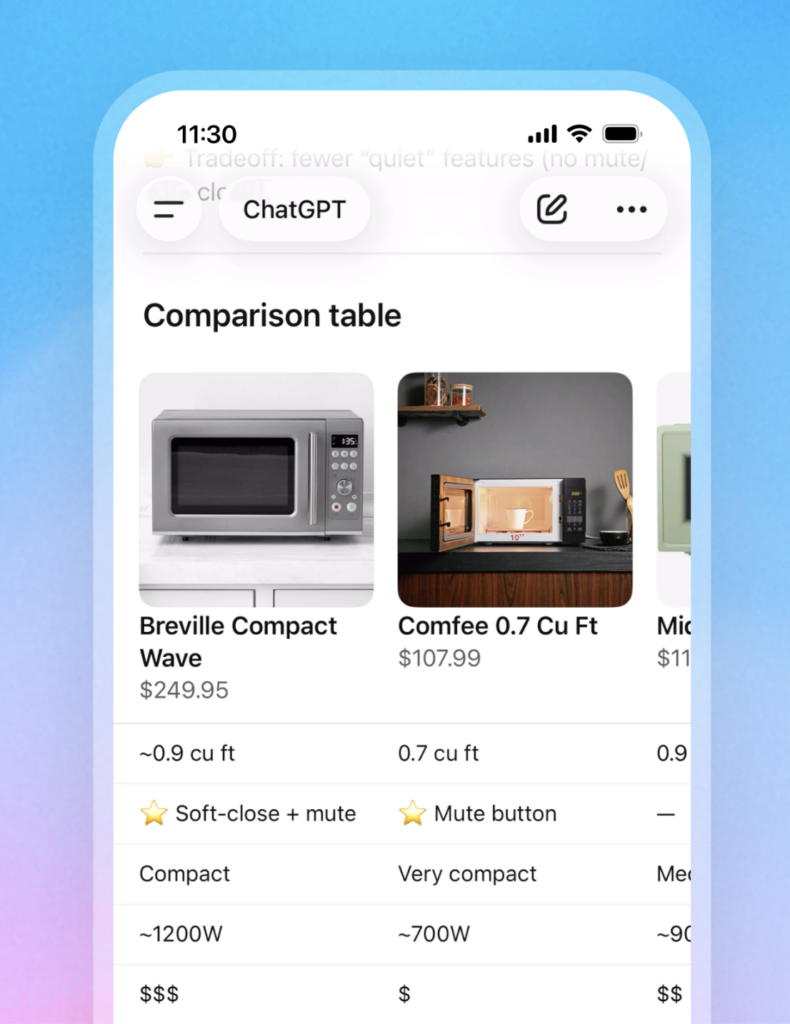
Luke surfaced the most interesting concept of the panel – ghost influence. “AIs can sometimes recommend your competitor based on things that you actually stand for,” he said. “They can cross the wires.”
He gave this smart advice: “If you can pick one word to define your company or your brand, you should do it, and you should hammer it home in every possible place you can, so the AIs in every language know that you equal that.”
The Sea of Sameness Isn’t an AI Problem
When every team is running the same tools at the same speed, the obvious worry is that everything starts to sound identical. The panel pushed back on the framing.
Shar argued that the AI isn’t creating the sameness. “When you give a vague direction to AI, it’s going to default to the average, and the average sounds like everyone else.”
Brands with watertight positioning – she cited Patagonia – will produce recognizable output reliably because the substance is already there.

Patricia drew the hard line on how her team uses AI. Brainstorming and first drafts are never finished work. “If I ever found someone just outputting tons of content that’s unedited, we’d be having a conversation about that,” she said. “It cannot maintain your brand voice for you.”
Specialists or Upskillers? The Talent Debate, Settled
There’s an active debate in marketing circles about whether to hire dedicated AI specialists or invest in upskilling the marketers already on the team. The panel is aligned to one side.
Patricia said, “I am upskilling my existing team. This is going to be a skill that you have to have now. If you are a marketer and you are relying on an AI specialist that you have just hired for your team, you’re in trouble.” Where outside hires do earn their keep, in her view, is at the operations level – people who can monitor tools, drive rollout, and accelerate adoption across functions.
Luke agreed, “The biggest thing is problem-set understanding,” he said. “To be an AI generalist, I don’t really care that much. If you really understand the problem and understand how to use the tools, now we’re talking.”
What Will Separate Leaders From Laggards Next
Closing the session, Katelyn asked each panelist for the single capability that will separate teams pulling ahead from those falling behind over the next 12 to 18 months. Each gave a different answer, and each is worth taking on board:
- Patricia – build an experimentation culture. “You must be willing to try and fail, and you have to have a culture that is accepting of that.” With one firm caveat – respect privacy and compliance guardrails. Non-negotiable.
- Luke – automate something end-to-end. Anything, however small. “Look at the difference in productivity gains from incremental changes to outright complete automation – it’s night and day. It’s the difference between single digits and 100%.”
- Shar – move from campaign thinking to system thinking. “Campaign thinking gets you a moment, but system thinking creates this compounding advantage.” Top content informs the next campaign, audience signals shape targeting, targeting shapes creative, creative feeds measurement, and the loop compounds.
The thread running through every answer can be summed up pretty much like this: maturity comes from the way you work, not from the stack you’ve bought. The teams that internalize that early will be the ones quietly pulling ahead while everyone else is still benchmarking tool subscriptions.
Want more sessions like this one? Register for one of our upcoming AI for Marketers events.