Using AI for content is irresistible, but certain aspects of it must nevertheless be resisted.
Dictionaries around the world have added “AI slop” to their latest editions, with the Australian Macquarie Dictionary naming AI slop its word of the year. They define it as “low-quality content created by generative AI, often containing errors, and not requested by the user.”
It’s a label that people around the world are eager to use and to apply directly to the brands that produce it.
The data backs up the sentiment, too. Klaviyo’s 2026 AI consumer research found that only 5% of APAC consumers fully trust AI-generated brand content. A 2026 Gartner survey found that half of US consumers would prefer to give their business to brands that don’t use generative AI in customer-facing content at all.
In the vast majority of cases, the problem is the absence of proper editing and human oversight. It’s fixable – but this is where humans retain their edge over AI.
Below are nine signs that AI slop is creeping into your marketing, and what to do about each.

1. The Em-Dash and Structural Red Flags
The vocabulary AI red flags in 2023 and 2024, such as delve, tapestry, realm, and leverage, have mostly faded as newer models have been trained out of those habits. What’s stuck around are structural patterns:
- “It’s not X, it’s Y” or “isn’t this, it’s that” (still very common)
- “Not only X, but also Y”
- Em-dashes sprinkled across every paragraph (the ChatGPT giveaway; RIP em-dash without spaces)
- Tricolons (three-part lists) for stacking statements on top of each other (a Claude speciality)
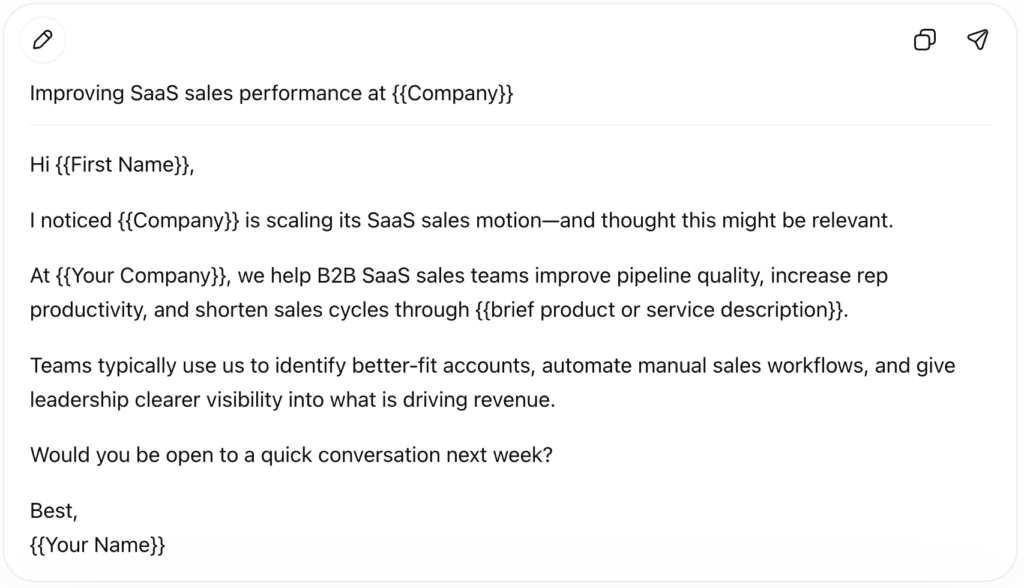
Some of these are pretty easy to prompt for or against. Others are more insidious and need careful attention.
The longer a piece becomes, the more likely AI is to resort to some level of efficiency and symmetry. Be aware of this, as you might scan a few lines and think it’s decent, but when you take the piece as a whole, it dawns on you that it’s very much AI-identifiable.
2. Convoluted Yet Repetitive Vocabulary for Simple Ideas
AI generally has a low diversity of vocabulary, while selecting convoluted words and robotic turns of phrase. For example, a blog post “navigates” a topic instead of “covering” it. An update “represents a significant shift in approach to…” instead of “changes how we do…”
Again, some of these have been trained out, but new versions persist, and despite being subtler, they’re still identifiable. Here are some examples:
- Quietly powerful, quietly transforms – no need for it/quietly used as a proxy for ‘natural’ language
- Actually and genuinely as emphasis – the sentence says the same without them – a typical Claude behavior
- Surprisingly simple, refreshingly honest, deceptively powerful – unnecessary combinations
- The colon setup, as in “The result: more sales.” Colons in prose can be great, but often land unnatural
- Borrowed startup metaphors like moat and flywheel – say the plain thing it stands for
- X is the easy part, the real work is Y – contrast for no gain
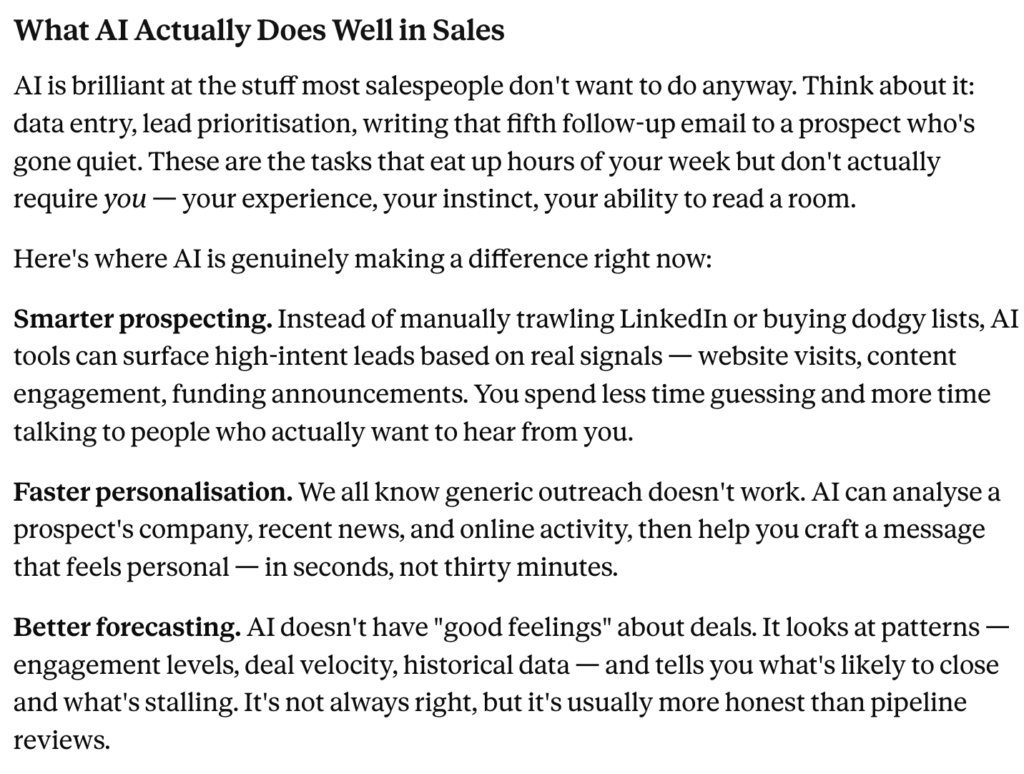
The test here is quite simple. Ask, do humans write or talk like this? Get in the habit of reading content aloud in your head. Most content should sound like a lifelike conversation.
3. No Point of View
AI excels at producing details but ultimately hedges. There’s no opinion. No “we think,” contrarian observations, or concrete predictions.
Google now has a name for this. Asked what creators should focus on in the AI search era, Search Liaison Danny Sullivan singled out “commodity content” as the thing to stop making – information that’s widely available with no unique perspective or expertise, and is interchangeable with what’s on any other site.
Google’s May 2026 core update is hitting aggregator-style pages with no original input hardest, while content built on original data, named experts, and first-hand insight is performing better.
It’s time to add more viewpoints, citations, quotes, and anything that moves your content from something anyone can replicate into something unique and human.
4. The 15-Second Takeaway Test Fails
A stellar piece of marketing content can typically be summarized by a reader in 15 seconds – “this is about X, and the argument is Y.”
AI-generated content often fails this test because it has too many small ideas and hedges away its central thesis.
You need to determine the load-bearing points you’re making and ensure they’re clear. Ask a colleague to read your draft and tell you, in one sentence, what it argues. If they hedge or paraphrase the headline back to you, the piece likely needs more editorial work.
This is a QA check, catching a common form of slop, which is content that reads competently but doesn’t truly say anything.
5. Confidently Wrong, Plausibly Written
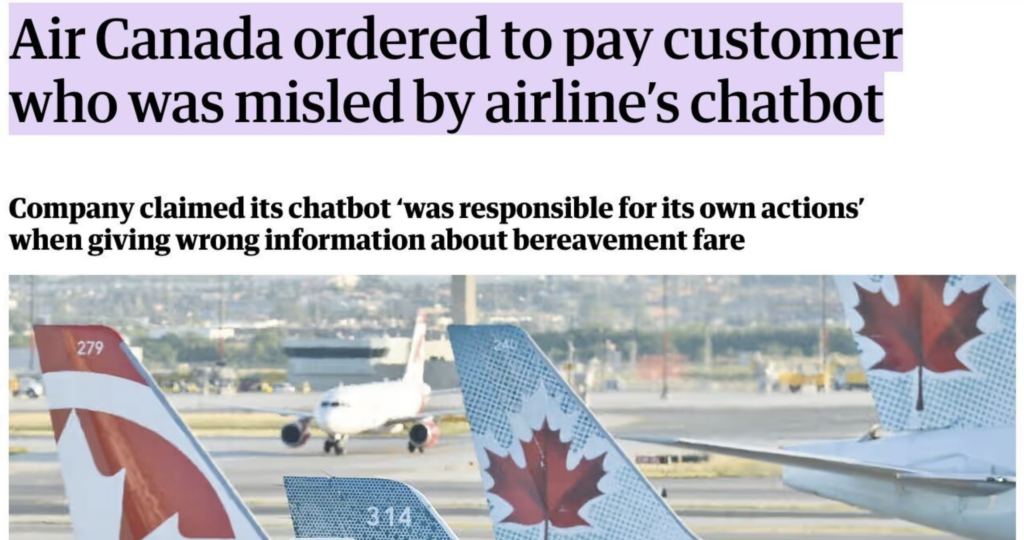
The most expensive form of AI slop is the kind that sounds right but isn’t. For example, in 2024, Air Canada was held liable for a chatbot that invented a bereavement-refund policy that didn’t exist. They failed in their defense.
Similarly, in October 2025, Deloitte agreed to partially refund the Australian government for a $290,000 report riddled with AI-generated errors – citations to academic papers that don’t exist and a fabricated quote attributed to a federal court judge.
These cases set a precedent that brands are accountable for AI-generated content on their channels, regardless of how the content was produced. Marketing teams should assume the same standard applies to everything they publish.
Always check the following:
- Statistics, percentages, and data points
- Product features, pricing, and specifications
- Quoted speakers and their actual statements
- Legal, regulatory, or compliance claims
- Competitor names, products, and positioning
- Dates, names, and place references
- Use of potentially copyrighted material, or material you don’t own the IP of
This crucially includes copyrighted material. Sure, ChatGPT might produce a product image or social media post with copyrighted content, whether it’s a Marvel superhero or Mickey Mouse, but using it makes you potentially liable.
6. Sudden Flood of Long Emails That Don’t Sound Like Your Team
One of the more dispiriting forms of AI slop arrives in the email or LinkedIn inbox. You might have already been on the receiving end of a sudden volume of emails that are slightly too long, slightly too polished, and don’t sound anything like the person whose name is at the top.
Scale and speed should never come at the sacrifice of quality in these types of communications, as one missed lead at the hands of AI slop could cost you dearly.
The first fix is to tighten the brief at the prompt level. Copy in true-to-life examples of how your team writes – ideally from the pre-AI era – and use the tools purely to ideate and draft, with heavy human editing and re-writing.
An authentic, even scrappy email that appears 100% human will outperform a polished one rammed with AI filler. Sometimes, imperfection is a winning ingredient.
7. AI-Generated Humans or Imagery That Crosses The Line
Visual AI slop is the most overt form of slop. Take Skechers, which received massive backlash twice in just over a year. The first for a full-page Vogue ad in December 2024, then again for a New York subway billboard in August 2025, both featuring blatantly AI-generated illustrations – true AI slop.
Mixing humans and AI is the least comfortable territory for B2C brands right now, and while plenty of brands get away with it, plenty get hounded across social media for indulging in AI slop.
So, naturally, countering the use of AI has now in itself become a strategy. Aerie pledged not to use AI models after J.Crew, H&M, and Guess all suffered similar fates to Sketchers. Polaroid and Heineken ran billboard campaigns celebrating their work as human-made.
LEGO went furthest, tagging its World Cup film with Messi and Ronaldo #HonestlyItsNotAI and has 5 million views on Facebook alone.
8. Volume Without Insight Density
Even now, AI struggles to deliver human-quality insight and is likely plateauing in its ability to mimic it. This comes back to the commodity content idea. Audiences can identify AI filler that’s competent at the surface level but doesn’t go anywhere.
Some warning signs you’re using AI for the sake of it:
- Publishing rate doubles but engagement holds flat or drops
- Articles summarize what others have already said without adding to the conversation
- Social posts all open with similar hooks (“Here’s why…”, “Most marketers get this wrong…”)
- You’ve slipped into a commodity content trap
The cure is to raise the publishing bar instead of the publishing rate, and make your existing content go further by re-purposing. A high-quality blog post should make a great social media story and be addable to newsletters. If you’re hiding your blog posts because they’re too obviously AI, it’s time to flip the quality.
9. No Human Gatekeeper on the Publish/No-Publish Moment
Give someone ownership of the content’s final outcome. When you lack ownership, AI drafts an asset, a team member tweaks it, and that’s it.
As Kate O’Neill puts it in her writing on the “authenticity premium”, consumers can sense when no one was really at the wheel, and they punish the brands that ship work with their eyes closed.
By the time anyone with editorial authority views the work, it’s already out in the world, and if no one’s name is attached to it, no one really cares about the quality.
The fix is to strengthen your editorial stance and to create a stronger connection among your content, team, and brand guidelines.
Stop publishing blog posts under the company and start adding names to them, with opinions, so people naturally want the quality to match their own inputs.
Your Anti-AI Slop Stance Going Forward
None of this is anti-AI. But it is anti AI-slop. Everyone is anti AI-slop, so brands have to be too.
It’s all about building a stronger editorial layer and connection between the team, the team’s views, and the output, while ditching the most insidious forms of AI. Here’s a round-up of what to do:
- Build an AI house-style doc: List the words, structures, and rhythms your brand voice doesn’t use, ideally created using hand-written content. Insert it into every prompt and editing checklist but don’t be over-content with the result. Always check to ensure that you’re not being too formulaic as AI will be lazy about applying your rules.
- Designate an editor-in-the-loop: Someone with the authority to own the content pipeline and ensure the brand is represented in every piece.
- Run the 15-second test before publishing: If a colleague can’t summarize the argument in one sentence, you might find the thesis confused or hedging.
- Verify every claim, every time: Stats, quotes, product details, competitor mentions – all checked against a primary source. Clamp down on risk of fact garbling and be judicious about copyright and IP.
- Read your team’s outbound emails and DMs: If they don’t sound like the people whose names are on them, that’s an issue. Emails and DMs are among the most human forms of communication. Maybe don’t use AI for them at all.
There’s still much more to learn. If you want to discover more about building AI marketing workflows that audiences trust, register for our upcoming Virtual AI for Marketers Summit!
Here are some similar articles you might enjoy:
- How Marketers Are Leveraging AI in 2026
- 8 Tips for Optimizing Your Website for AI Search
- Top 10 AI Marketing Leaders to Follow in 2026