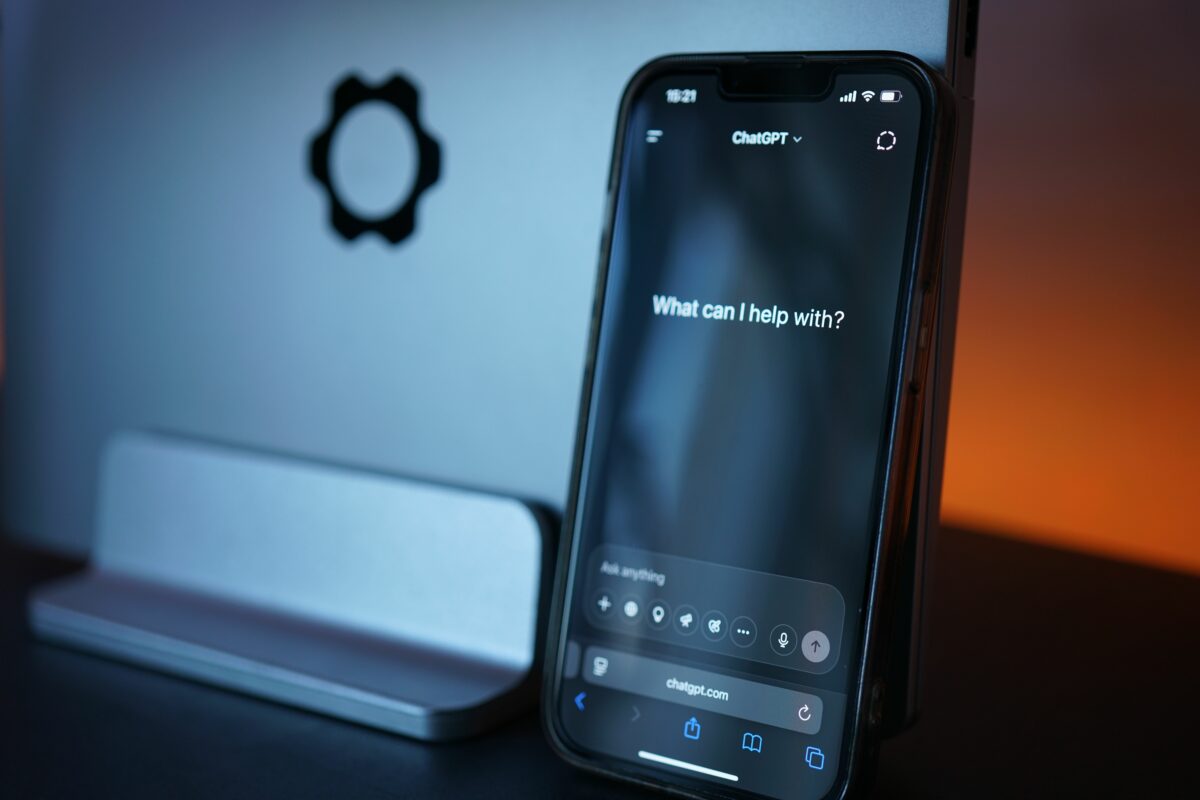
In February 2026, OpenAI started showing ads to a small group of ChatGPT users in the US.
A few months down the line, they’re sold in more than 60 countries, and any eligible business can buy them directly. OpenAI is also testing AI agents that talk to customers on a brand’s behalf.
As for what they look like, you may or may not have seen them yet.
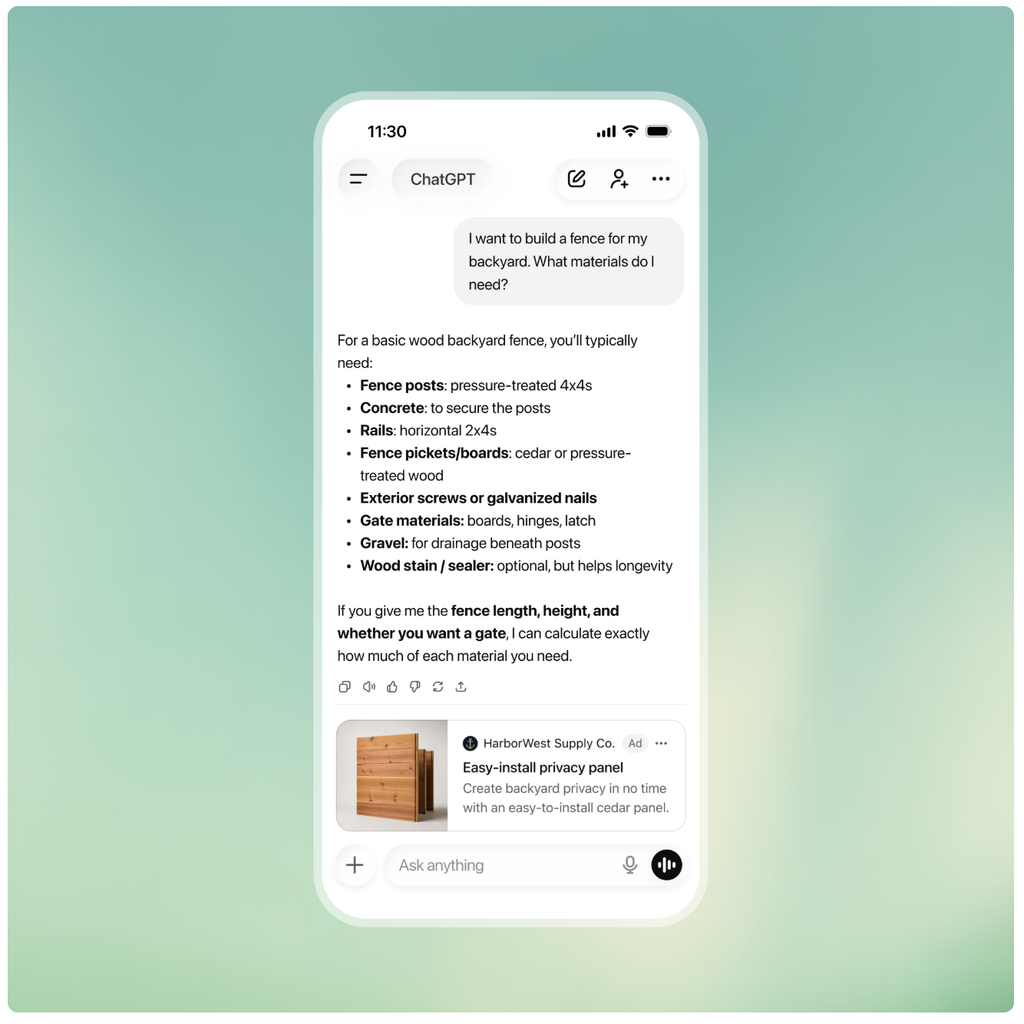
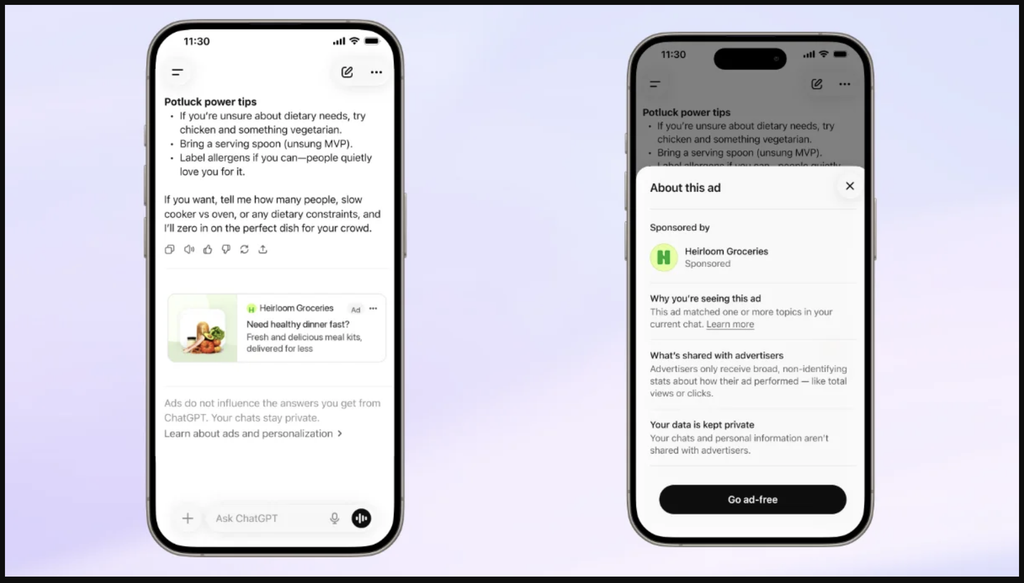
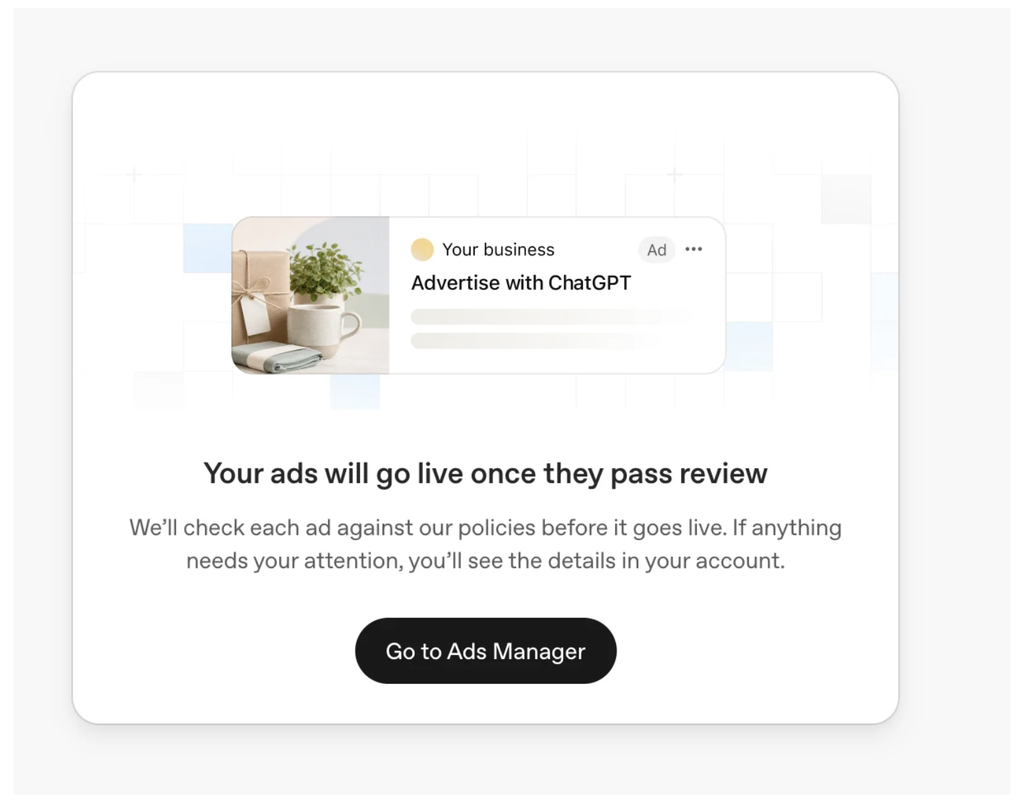
OpenAI says ChatGPT ads are labeled cards that appear below ChatGPT’s answers for people using the free version or the lower-cost Go plan.
You target them by describing the conversations you want to appear in rather than bidding on keywords. Pricing is per view or per click, with a $25 daily minimum in the US.
We’ll cover everything you need before testing ChatGPT ads, from targeting and costs to useful integrations and more.

What Are ChatGPT Ads?
ChatGPT ads are sponsored placements that appear below ChatGPT’s responses. OpenAI says they’re always clearly labeled and don’t influence the AI’s behavior. Advertisers can’t see anyone’s conversations.
OpenAI has struggled to monetize its business, so this seemed inevitable. And now it’s growing rapidly. At the end of August, OpenAI announced that ChatGPT Ads had reached a $1 billion annualized revenue run rate in under 200 days.
An annualized run rate is current monthly revenue multiplied by 12. It estimates what the business would earn over a full year if it kept selling at today’s pace.
Who Sees ChatGPT Ads
Ads only appear for people on the Free and Go plans. OpenAI’s help center confirms that Plus, Pro, Business, Enterprise, and Edu accounts don’t see ads, and neither does anyone identified or predicted to be under 18. This could all change.
Free users can also switch ads off in exchange for lower usage limits. That means the audience you’re buying is smaller than ChatGPT’s total Free user base.
ChatGPT Ad Formats
There are three formats, though one is still in a limited test as of late 2026:
- Standard ads: A card below the response showing your brand name, logo, headline, description, image, and a link to your landing page. This is the default format and the one most advertisers use.
- Product-feed ads: Ads built from your product catalog, so ecommerce brands can promote individual products without creating each ad by hand. Shopify merchants can set these up through the ChatGPT Ads app in the Shopify App Store.
- Sponsored Agents: Announced on September 16 and currently in a US test with select advertisers. After seeing an ad, a user can choose to open a clearly labeled conversation with the brand’s own AI agent.
Sponsored Agents are limited to a small group of US advertisers for now, so most marketers will be working with the first two formats.
How ChatGPT Ad Targeting Works
ChatGPT doesn’t use keywords. Instead, you write context hints for each ad group, describing the conversations, topics, or situations where your product is relevant.
OpenAI says that information guides ad matching, but they can’t guarantee any keywords trigger exact placements. It’s all down to the AI to recommend the ad in the right context.
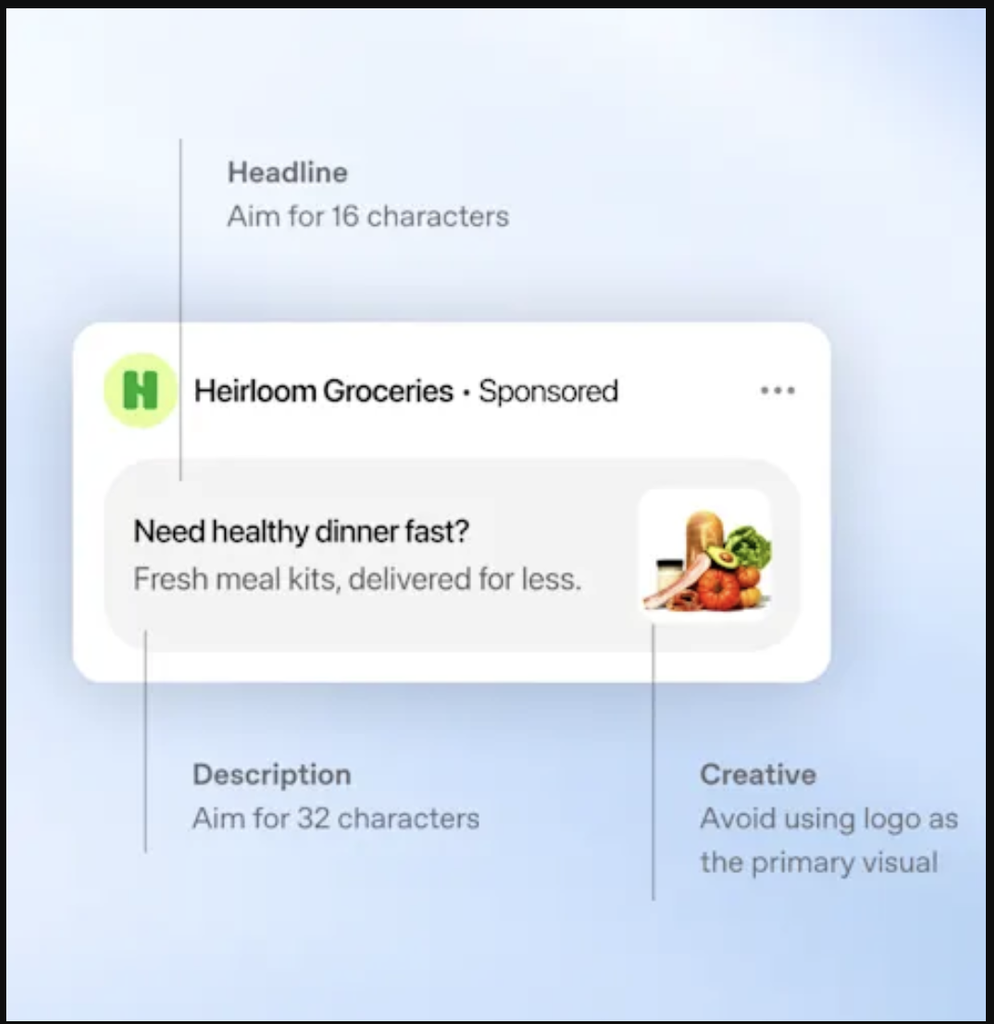
To decide whether to show your ad, OpenAI compares what the person is discussing with your context hints, landing page, headline, and ad copy.
You can add three more controls on top:
- Location: Every market supports country targeting, and US campaigns can narrow down to state, metro area, or ZIP code.
- Platform: You can limit a campaign to particular platforms, for example, if you only want to show ads to people using ChatGPT on mobile.
- Custom audiences: Upload a customer list to include, exclude, or adjust bids for the people on it. Any audience you target needs at least 25,000 matched users, and OpenAI recommends 100,000, though exclusion lists can be smaller.
The 25,000 figure only counts people OpenAI can match to a ChatGPT account, and not every email or phone number on your list will match. Expect to upload a considerably larger list to clear the minimum. This is very much an advanced feature for enterprises.
If you advertise in the European Economic Area or Switzerland, OpenAI advises against custom audiences (probably because they don’t work) while ad personalization currently isn’t available there.
What ChatGPT Ads Cost
There’s no account minimum or setup fee. Ads are sold through what OpenAI calls a ‘relevance-weighted, second-price auction.’
Relevance counts alongside your bid in deciding which ad wins. The winner then pays roughly what it took to beat the next advertiser, so you’ll often pay less than your maximum bid.
Choose an objective
Every campaign starts with one of three objectives:
- Views: You pay per thousand impressions, which suits awareness campaigns.
- Clicks: You pay per click, and OpenAI recommends starting with a maximum bid of $3 to $5.
- Conversions: OpenAI shows your ads where it predicts people are most likely to complete an action you choose, such as a purchase or sign-up. You’re still billed per click or per thousand impressions.
Be aware that you never pay per conversion, even on a conversion campaign. By default, conversion campaigns use Maximize Results, which leaves bidding to OpenAI. If you’d rather set a limit yourself, switch to manual bidding and add a Bid Cap.
The Bid Cap is the most you’re willing to bid for a conversion. The system combines it with how likely each click is to convert and uses that to determine what to bid in each auction. It isn’t the price you pay or a guaranteed cost per acquisition.
It is honestly quite complex, so you’ll need to sift through the options and discuss them with your clients or teams.
Set a budget
The minimum daily budget is $25 in the US, with minimums of £15, €15, and 25 Canadian or Australian dollars in those currencies.
How to Track ChatGPT Ad Results
OpenAI provides its own tools for measuring conversions, and you can add standard UTM tracking for the analytics you already use.
Set up the Pixel and Conversions API
The OpenAI Pixel is a piece of JavaScript on your site that records actions like purchases and sign-ups.
The Conversions API sends the same events directly from your server instead of the visitor’s browser, so you can use both for detailed tracking data.
Tag each conversion with the same event ID to avoid double-counting.
Choose your attribution windows
Ads Manager is OpenAI’s platform for creating and managing campaigns. It lets you set how long after a click a conversion still counts, with a click-through window of 7, 14, or 30 days.
You can also count people who saw your ad without clicking and converted within a day.
OpenAI uses last-touch attribution, which means each conversion is credited to the last ChatGPT ad the person clicked or saw.
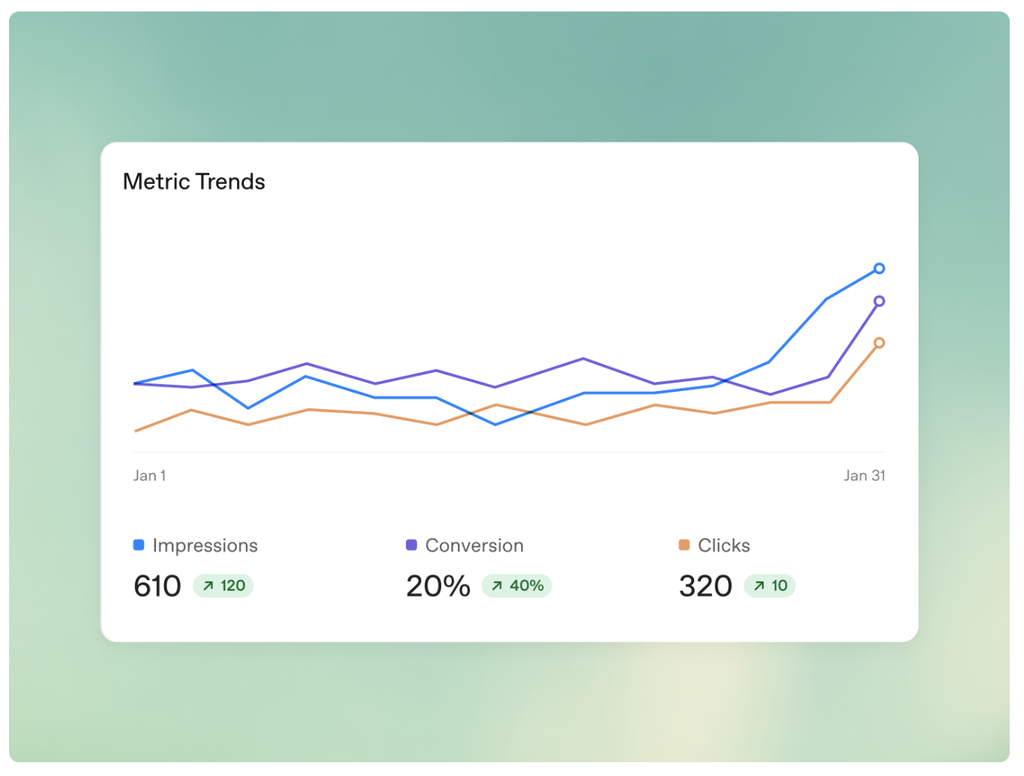
Most brands will use OpenAI’s simpler native tools for tracking first.
How to Launch Your First ChatGPT Ads Test
Careful experimentation here is key, as this is obviously new territory for most. A first test should tell you whether the channel works for your business, so keep it simple and measurable:
- Set up tracking first: Install the OpenAI Pixel and, ideally, the Conversions API before launching, so your earliest clicks are counted.
- Pick one objective: Choose Clicks for a quick read on traffic, or Conversions if your tracking is reliable and your chosen event happens often enough to learn from.
- Write specific context hints: Describe real buyer situations instead of listing products, and give each ad group its own distinct theme.
- Create several ad variations: Give each ad group a few headlines and images, so the system has options to test and you have results to compare.
- Wait at least 24 hours before judging: Spend can take seven to eight hours to appear and conversions at least a day, so early figures will understate both.
Should You Test ChatGPT Ads This Quarter?
ChatGPT ads are still young, and OpenAI keeps adding formats, markets, and measurement options. That makes them worth a small, well-tracked test, so you understand how the channel performs for you before deciding whether to scale.
Enter this new frontier of advertising with realistic expectations. It’s all a bit of a sandbox right now, though anecdotal reports have generally been positive.
If you already use HubSpot, the integration is the simplest way to start, with tracking and reporting integrated alongside your other channels.
Want to go deeper into building a paid media strategy for the AI era? Register for our upcoming AI for Marketers Summit!
Here are some similar articles you might enjoy:
- Top HubSpot AI Features For Marketers To Use In 2026
- Top 10 Claude Skills for Marketers in 2026
- Top 10 AI Tools Every Marketer Should Be Using (Free + Paid)