
The AI marketing world is splitting in two. One camp where marketers use AI to amplify their work, and another where they’re trying to understand why they’re falling behind.
2026 is the year that the divide becomes permanent.
The question of “should we use AI?” is yesterday’s news. But that doesn’t mean AI can be used without care, throwing marketing best practices out of the window.
What matters now is understanding how AI changes how customers interact with businesses, and how you can leverage tools to your advantage.
Here are eight undeniable AI trends that will define marketing going forward.

1. Agentic AI Goes From Pilot to Production
AI has primarily operated only when prompted, but that’s changing now as agents begin to operate autonomously in the background.
Gartner projects that 40% of enterprise applications will include AI agents by the end of 2026, up from less than 5% in 2025.
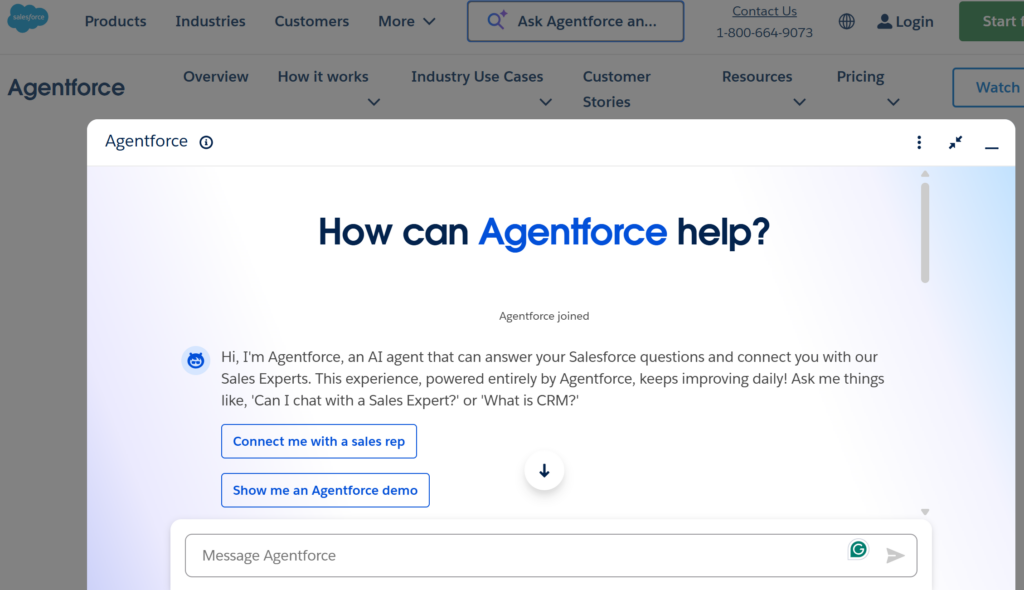
Agentic systems like Salesforce’s Agentforce, HubSpot’s AI agents, and tools like Relevance AI or Zapier’s new AI Actions don’t wait for instructions. You set goals, they figure out how to achieve them, whether that’s handling lead nurturing, content optimization, competitive monitoring, or campaign adjustments.
McKinsey reports companies have accelerated campaign execution by 15x, reduced customer service time by 25%, and lifted satisfaction by over 800% in some cases. One European insurer redesigned its entire commercial model in 16 weeks using embedded agents throughout the sales journey.
If your existing software platforms offer agentic functionality, start to experiment. If you’ve tried tools like Zapier before but couldn’t get value out of them, you might find they’re considerably more accessible now.
2. GEO/AI SEO/LLMO Replaces SEO as the Visibility Game
2025 was the year AI challenged the classic search engine that has defined the internet since the late 90s. ChatGPT first teamed up with Microsoft to embed Bing into their chatbot.
Google then rolled out the AI Overviews feature, which now appears in nearly all search results. Add smaller players like Perplexity, and the direction of travel is key.
Remarkably, 60% of Google queries now end on the SERPs. Your beautifully optimized content? It might feed the AI overview and SERPs ranking still, but they don’t see it.
Enter Generative Engine Optimization (GEO), also called Large Language Model Optimization (LLMO) or just AI SEO – the practice of getting your brand cited in AI-generated answers instead of ranked on a search page.
The problem? Fewer than 10% of sources cited in ChatGPT, Gemini, and Copilot rank in Google’s top 10 for the same query. Your SEO strategy isn’t transferring, and this is a nascent area of marketing that no one has definitively ‘won’ yet.
There are a few emerging best practices:
- Offer clear, direct information that’s helpful
- Ensure quality external linking and source usage
- Clear, conversational headers
- Structured data and FAQs are important when appropriate
- Present answers to the kinds of questions users ask AI, which tend to be longer, often specific questions
But this is a fast-changing area, so always do your research on tools that promise to get brands ranking #1 in LLMs and AI search.
3. AI Agents Are Making Purchase Decisions
Your next customer might not be human. Salesforce research from November 2025 found that 25% of consumers have already made an AI-assisted purchase, with 86% of those transactions completed by clicking a direct product link provided by the AI.

30% of consumers say they’d let an AI agent complete purchases on their behalf without human approval. Among Gen Z? That number jumps to 63%. With OpenAI now embedding Shopify into ChatGPT, it will become common for people to buy directly from AI interfaces.
AI agents don’t necessarily respond to emotional appeals in the same way as humans. They evaluate structured data – specifications, verified reviews, clear pricing, inventory signals, and trust markers. That’s the core decision tree.
Make your products machine-readable
If your product data is messy, your reviews aren’t structured, or your checkout flow can’t handle agent-led transactions, you’re invisible to this traffic.
Ensure specifications are complete and accurate, enrich reviews with detailed attributes that AI can parse, make inventory status crystal clear, and eradicate hidden fees or confusing pricing structures.
Explore how Shopify integrates with ChatGPT. WooCommerce looks to be joining them.
4. The Authenticity Backlash Is Real
AI is everything for marketers, then, right? Wrong. When it comes to the channels customers do still interact with, they want human content. In fact, sometimes, even a hint of AI might put them off entirely.
Audience enthusiasm for AI-generated content plunged from 60% in 2023 to 26% in 2025. That’s a collapse. Sprout Social found that the #1 thing consumers want brands to prioritize in 2026 is human-generated content.
The data keeps coming. 52% of social users are concerned about brands posting AI content without disclosure. 46% aren’t comfortable with AI influencers. Sacrificing authenticity for efficiency is clearly a risk.
Lo-fi, behind-the-scenes content shot on phones might outperform big-budget AI-generated productions on TikTok and Instagram. Users want to see real people, real workspaces, real challenges, not absolute perfection that screams “made by AI.”
AI as collaborator, not creator
The solution isn’t to abandon AI. It’s to use it differently. Let AI handle research, first drafts, and optimization. But the final output needs a human voice, human perspective, and human imperfection.
87% of consumers prefer a hybrid model that sensitively combines human empathy with AI efficiency. They can tell the difference, and smaller or newer brands will suffer the most from any mishaps here.
5. One Asset, Ten Formats, Five Minutes
Marketing teams are using multimodal AI to transform a single blog post into a podcast episode, video series, infographics, social posts, and even AR experiences – all optimized for each platform’s unique requirements.
We’ve uncovered a few excellent tools that enable this in our past blog:
- ElevenLabs handles multilingual voiceovers at scale – clone your voice once, generate content in 32 languages
- Flair.ai generates product photography that once cost thousands – drag your product onto a virtual canvas, add props, generate shoots in minutes
- Descript turns long-form video into clips, transcripts, and social snippets automatically – edit video like a doc
- Opus Clip identifies the best moments in your content and reformats them for TikTok, Reels, and Shorts with one click
Rather than rolling it off the conveyor belt, create cornerstone content worth amplifying – something with a unique perspective, proprietary data, or genuine insight – then use AI to atomize it intelligently across channels. Quality still compounds.
6. Conversational Commerce Runs 24/7
AI agents are handling customer conversations across WhatsApp, SMS, email, chat, and DMs.
68% of consumers now expect chatbots to deliver the same expertise as highly skilled human agents. 43% of shoppers are excited to use generative AI for service interactions.
Chatbots can help you nurture leads and close sales directly in chat interfaces. AI agents can qualify inbound leads instantly, answer product questions in real-time, and move prospects through your funnel.
How it works in practice
Many marketing automation platforms now offer this. HubSpot’s conversation AI, Intercom’s Fin, Drift’s conversational marketing, and ManyChat for Instagram/WhatsApp.
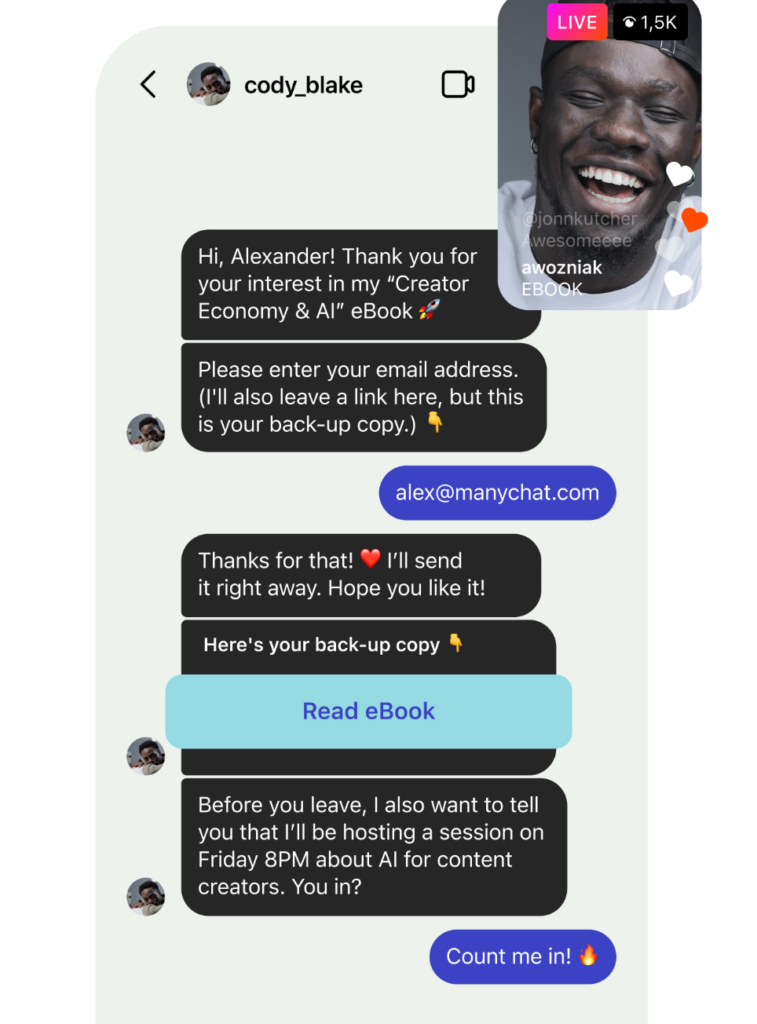
You’re setting up trigger-based conversations. For example, someone downloads a guide and gets added to a nurture sequence via chat.
Or suppose a customer messages a brand’s Instagram or on-site chatbot asking, “Looking for running shoes under $100.” The AI asks about terrain, shows three options with images, and processes the order in chat.
7. First-Party Data as Competitive Moat
With the mass phase-out of cookies, first-party data is becoming vital. First-party data is information customers give you directly – email addresses, purchase history, which pages they visit on your site, and what they click in your emails.
Across pilots and programs to date, shifting to first-party behavioral data can improve acquisition costs and ROI. For example, The New York Times saw campaign performance improve 3-4x after abandoning third-party cookies entirely. Nike achieved a large improvement in CLV through its membership program.
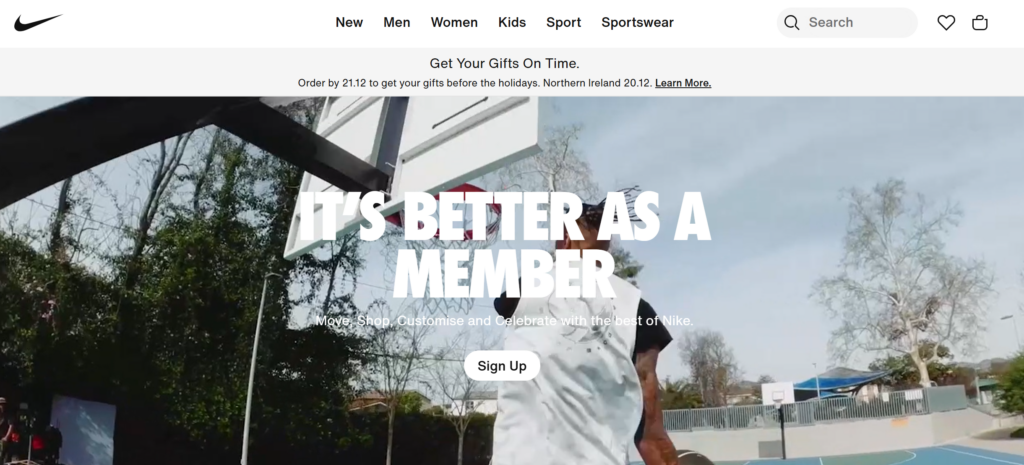
A membership program is all about a value exchange. Customers benefit from early access to products, exclusive discounts, and personalized recommendations. In return, Nike gets direct access to their data and behavior within Nike’s ecosystem.
To get started with first-party data, you’ll need to check and collate what you already have:
- Audit your data sources – Map CRM, marketing automation, web analytics, email engagement, purchase history
- Identify integration gaps – Where does data live in silos? Where do systems not communicate?
- Build value exchanges – Create clear consent flows that offer real benefits for data sharing
- Establish trust markers – Be transparent about collection, usage, and protection
By maximising the data you collect and feeding it into campaigns, you’ll find new ways to serve customers and optimize experiences for your audience.
8. Building Personal AI Marketing Playbooks
AI tools are getting more powerful, but most marketing teams are still improvising. Someone tries a prompt that works, doesn’t document it, and weeks later, no one remembers what they did.
This is fine for experimentation, but it doesn’t scale. The brands pulling ahead are systematizing their AI workflows by documenting workflows and creating knowledge bases.
When you get a strong result, reverse-engineer it:
- What prompt structure worked?
- What context did you provide?
- What edits did you make after?
- Can someone else on your team replicate this?
The trend here is organization and systemization. Move beyond experimenting with AI and start structuring your processes. This allows strong results to be replicated across processes and campaigns while retaining brand consistency.
Where This Leaves Marketers
The eight trends above are already live. Billion-dollar companies are implementing them right now.
Here’s how to move and take advantage:
- Identify your biggest bottlenecks – traffic, lead nurturing, content production, data integration
- Choose the trend that directly addresses it
- Implement properly over the next few months
- Document what works, then expand to the next trend
The future belongs to marketers who understand AI and wield it strategically while avoiding risks and errors. It’s a careful balance, one that won’t grow less important through 2026.
Want to learn more about AI’s hardest-hitting trends and strategies? Register for our upcoming Virtual AI for Marketers Summit!